Hakomi & Somatic Therapy
At Big Picture Therapy, I offer somatic therapy in Los Angeles through a gentle, experiential approach rooted in Hakomi and mindfulness. In my Atwater Village practice, we slow down, get curious about what’s happening beneath the surface, and explore how the body holds our experiences, emotions, and patterns.
Experience a mindful pattern study.
Hakomi is a body-centered psychotherapy grounded in mindfulness, compassion, and a loving presence.
The word itself – Hakomi – comes from the Hopi language and asks a simple but profound question: “Who are you?” Not who you think you should be, but who you really are beneath all the layers.
Through gentle curiosity and mindfulness, Hakomi helps reveal the unconscious beliefs stored in your body – the tightness in your jaw that says, “Nice women don’t get angry,” or the collapse in your chest that whispers, “I’m not enough.”


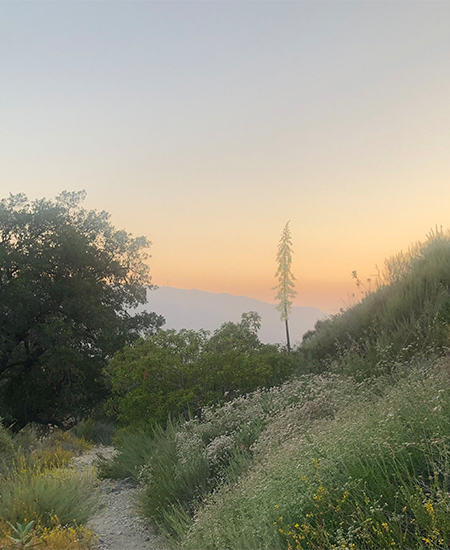
We look at the Inner Landscape.
Here’s how it works: we slow way down and become mindful about what’s actually happening in your inner world right now. It’s like opening a window and seeing an entire landscape unfold before you.
Maybe it starts with tension in your shoulders, a flutter of anxiety in your chest, or a sudden memory that surfaces. These aren’t random – they access roads to unconscious material.
As the session unfolds, we explore the landscape and patterns that emerge, including how you organize yourself and your habitual ways of protecting, coping, or making sense of the world. I might offer a brief exploration of movement, expression, or a phrase and study the resulting shifts.
Clients often experience deep releases, bringing clarity and insight that finally make sense of old, stuck places.
You might ask, “Is Hakomi Right for Me?”
If you’ve tried talk therapy and felt like something was missing, or tried to “think your way out” of patterns only to get stuck in the same loop, Hakomi might be exactly what you need.
This approach is especially powerful for individuals who possess insights and tools but seek an immersive experience rather than an explanation. This model also works well for individuals with experience in meditation, energy practices (such as Reiki or Qigong), yoga, or dance. It’s for people for whom a body-based or experiential approach resonates more deeply.
Either way, we create a safe, relational space where your body’s wisdom can finally be heard, and where old beliefs can be examined with compassion rather than judgment. You get to discover what it feels like when your mind and body are actually on the same team.
If you are ready to explore the inner landscape that involves a mind/body experience, please contact me today for more information.